Home › Knowledge Hub › IPC Education › Hand Hygiene Training for Aged Care Workers: Best Practice Guide
IPC Education
By Lyndon Forrest, Managing Director, Infection Prevention Services (IPS) · Clinically reviewed by Bridgette Mackie, RN & Dianne Newey, RN, Clinical Directors · June 2026 · 9 min read
Hand Hygiene Training for Aged Care Workers: Best Practice Guide
TL;DR —
Hand hygiene training for aged care workers is the single most effective measure to prevent healthcare-associated infections (HAIs). The WHO 5 Moments for Hand Hygiene framework, adapted for aged care by Hand Hygiene Australia, defines when hand hygiene must be performed: (1) before touching a resident, (2) before a procedure, (3) after a procedure or body fluid exposure risk, (4) after touching a resident, and (5) after touching a resident’s surroundings. Under the Strengthened Aged Care Quality Standards (effective 1 November 2025), Standard 4: The Environment, Outcome 4.2; Infection prevention and control, Action 4.2.1 requires the application of standard and transmission-based precautions including hand hygiene. National aged care hand hygiene compliance was 87.1% in 2024 (Hand Hygiene Australia). Training must cover both alcohol-based hand rub (ABHR) and soap-and-water technique, be assessed through practical observation, and be reinforced through regular auditing.
Why Is Hand Hygiene Training Critical in Aged Care?
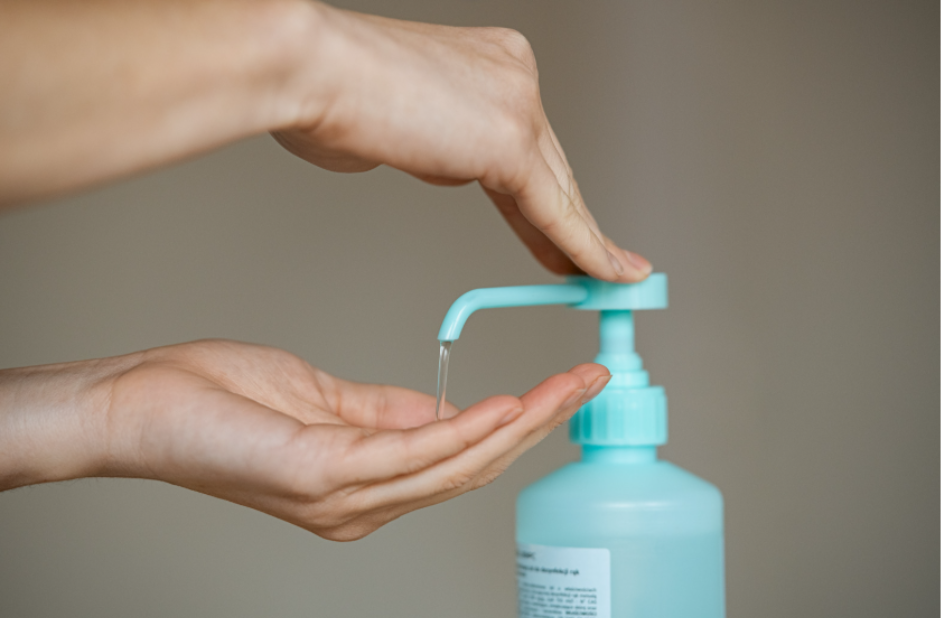
Hand hygiene training for aged care workers addresses the primary mode of pathogen transmission in care settings — contaminated hands. The World Health Organization (WHO) identifies hand hygiene as the single most important measure for preventing healthcare-associated infections (WHO Guidelines on Hand Hygiene in Health Care, 2009).
Aged care environments present specific hand hygiene challenges: high-frequency resident contact, shared living spaces, residents with cognitive impairment who may not perform their own hand hygiene, staff working across multiple residents in rapid succession, and variable access to hand hygiene facilities — particularly in home care settings.
Hand Hygiene Australia (HHA), the national hand hygiene initiative managed by the ACSQHC, reported national aged care hand hygiene compliance at 87.1 per cent in 2024. However, individual facility rates ranged from below 50 per cent to above 95 per cent, demonstrating that training quality and reinforcement vary significantly across the sector.
A 2022 Australian study published in Infection, Disease & Health found that multimodal hand hygiene interventions (combining training, auditing, feedback, and reminders) produced sustained compliance improvements of 15–25 percentage points over 12 months in aged care facilities (Mitchell et al., 2022).
What Are the 5 Moments for Hand Hygiene in Aged Care?
The 5 Moments for Hand Hygiene framework was developed by the WHO (2009) and adapted for Australian healthcare by Hand Hygiene Australia. In aged care, the 5 Moments are applied to all settings where care is delivered — residential facilities, home care, and community care.
| Moment | Definition | Aged Care Example |
|---|---|---|
| Moment 1: Before touching a resident | Before any direct contact with a resident’s intact skin | Before assisting with dressing, repositioning, taking vital signs, or personal care |
| Moment 2: Before a procedure | Before any clean or aseptic procedure | Before wound care, catheter care, medication administration, or subcutaneous injection |
| Moment 3: After a procedure or body fluid exposure risk | After a procedure that involves contact with body fluids, even if gloves were worn | After wound care, continence care, suctioning, or contact with mucous membranes |
| Moment 4: After touching a resident | After any direct contact with a resident | After assisting with mobility, personal care, or physical assessment |
| Moment 5: After touching a resident’s surroundings | After contact with surfaces and objects in a resident’s immediate environment | After touching bedside furniture, call bell, walking frame, or bed linen |
Hand hygiene training for aged care workers must emphasise that glove use does not replace hand hygiene. Hand hygiene must be performed before donning gloves and immediately after removing gloves. This is one of the most common compliance failures identified during hand hygiene audits.
When Should Workers Use ABHR vs Soap and Water?
Hand hygiene training for aged care workers must cover both alcohol-based hand rub (ABHR) and handwashing with soap and water. Each method has specific indications, and staff must know when each is required.
| Method | When to Use | Technique Requirements |
|---|---|---|
| Alcohol-based hand rub (ABHR) | Preferred method for all 5 Moments when hands are not visibly soiled. Minimum 60% v/v ethanol or equivalent alcohol concentration. | Apply sufficient product to cover all hand surfaces; rub hands together using standard technique for minimum 20 seconds until hands are dry. Do not wipe or rinse hands. |
| Soap and water (handwashing) | Required when hands are visibly soiled or contaminated with organic matter. Required after caring for a resident with Clostridioides difficile infection or norovirus/viral gastroenteritis (ABHR does not reliably inactivate C. difficile spores or non-enveloped viruses). Required after using the toilet. | Wet hands; apply soap; rub all surfaces for minimum 20 seconds using standard technique; rinse under running water; dry thoroughly with single-use towel. |
The ACSQHC Aged Care IPC Guide (2024) emphasises that ABHR is the preferred method in most clinical situations because it is faster, more effective against most pathogens when hands are not visibly soiled, less damaging to skin with repeated use, and available at the point of care (wall-mounted dispensers, personal carry bottles). HHA also emphasises applying an emollient-containing lotion or cream, chemically compatible with the ABHR and soap to minimise skin reactions, is critical to maintaining your skin’s protective barrier and preventing occupational dermatitis.
Need help implementing this in your facility? The IPS Hub gives your IPC Lead instant access to ready-made policies, procedures, and audit tools — updated monthly.
How Should Hand Hygiene Training Be Delivered?
Effective hand hygiene training for aged care workers uses a multimodal approach. The WHO Multimodal Hand Hygiene Improvement Strategy identifies five components that, when combined, produce sustained compliance improvement:
System change — ensuring ABHR and handwashing facilities are accessible at the point of care (within arm’s reach)
Training and education — initial and ongoing practical training in technique and 5 Moments identification
Observation and feedback — regular hand hygiene audits with individualised feedback
Reminders in the workplace — posters, visual prompts, screen savers, stickers on ABHR dispensers
Institutional safety culture — leadership commitment, peer accountability, open discussion of hand hygiene performance
Practical Training Methods
UV fluorescent hand rub demonstration — staff apply fluorescent lotion, perform their usual hand hygiene technique, then inspect under UV light to identify missed areas. Highly effective for visual learning.
Step-by-step technique demonstration — trainer demonstrates the WHO hand rub technique (6 steps plus wrist coverage); staff perform return demonstration
5 Moments scenario cards — staff are presented with clinical scenarios and must identify which Moment(s) apply and whether ABHR or soap and water is required
Buddy observation — paired staff observe each other’s hand hygiene practice during a shift and provide structured feedback
Toolbox talks — 5–10 minute focused sessions during shift handover addressing one specific hand hygiene topic (e.g., ‘gloves do not replace hand hygiene’)
How Is Hand Hygiene Compliance Audited in Aged Care?
Hand hygiene auditing is an essential component of hand hygiene training for aged care workers — it measures whether training has translated into practice and identifies areas requiring further intervention.
The Hand Hygiene Australia Audit Process
Hand Hygiene Australia (HHA) provides the national audit framework for Australian healthcare and aged care. The HHA audit methodology is based on the WHO’s direct observation method. Key elements include:
Trained auditors observe hand hygiene ‘moments’ during routine care
Each moment is recorded as ‘hand hygiene performed’ or ‘hand hygiene not performed’
Compliance rate = (moments with hand hygiene performed / total moments observed) x 100
Minimum 200 moments per audit period recommended for statistical validity
Auditors must complete the HHA online auditor training and validation programme
Results are submitted to the HHA national database for benchmarking
Interpreting Audit Results
| Compliance Level | Interpretation | Recommended Action |
|---|---|---|
| 90% or above | Meets or exceeds national benchmark | Maintain current training; annual refresher; continue routine auditing |
| 80–89% | Adequate but improvement potential exists | Targeted training for staff groups or Moments with lowest compliance; increase audit frequency |
| 70–79% | Below acceptable standard; training intervention required | Conduct targeted TNA; deliver remedial training; increase audit frequency to monthly |
| Below 70% | Significant non-compliance; urgent intervention | Immediate TNA; intensive retraining programme; daily audit and feedback; report to governance committee |
What Are Common Hand Hygiene Failures and How Are They Addressed?
Hand hygiene audits in aged care consistently identify recurring failure patterns. Addressing these failures through targeted training improves compliance sustainably.
| Common Failure | Root Cause | Training Intervention |
|---|---|---|
| Missing Moment 1 (before touching a resident) | Habit-based care delivery; urgency; lack of awareness | 5 Moments scenario training; visual reminders at room entry; ABHR at point of care |
| Missing Moment 5 (after touching surroundings) | Lack of understanding that environment is contaminated | Education on environmental contamination; training on defining the ‘resident zone’ |
| Skipping hand hygiene when wearing gloves | Belief that gloves provide sufficient protection | Training emphasising that gloves do not replace hand hygiene; practical demonstration of bacterial transfer through gloves |
| Incorrect ABHR technique (insufficient coverage) | Rushing; not applying enough product; missing fingertips and thumbs | UV light demonstration; step-by-step technique practice; posted technique reminders |
| Using ABHR when soap and water required (C. difficile, norovirus) | Lack of knowledge about ABHR limitations | Specific training on when soap and water is mandatory; clinical scenario quizzes |
| Damaged skin from frequent handwashing | Excessive soap-and-water use; not using skin care products | Training on correct ABHR use (less skin damage); hand care program; moisturiser is readily available at the point of care where possible; work and nurses’ stations, close to sinks. Ensure it is labelled to prevent confusion with ABHR |
What Are the Hand Hygiene Considerations for Home Care Workers?
Hand hygiene training for aged care workers in home and community care settings must address the unique challenges of delivering care outside a facility. Home care workers may not have access to fixed hand hygiene facilities at every point of care.
Carry personal ABHR (minimum 60% v/v ethanol) — clip-on or pocket-sized bottles
Perform hand hygiene on entry to and exit from each client’s home (equivalent to entering and leaving a resident zone)
Assess each client’s home for handwashing facilities — identify the nearest sink with running water and soap before commencing care
Use soap and water at the client’s home when hands are visibly soiled or when caring for a client with suspected or confirmed C. difficile or viral gastroenteritis
Perform hand hygiene between car and client — hand hygiene before exiting the car is not sufficient if the worker then touches a gate, door handle, or other surfaces
Store ABHR according to manufacturer instructions — avoid leaving in direct sunlight or in vehicles during extreme heat (flammable; effectiveness may be reduced)
TiNA — Training Needs Analysis Tool: Identify IPC training gaps across your workforce with TiNA — our Training Needs Analysis tool designed specifically for aged care facilities. Currently in pilot.
Frequently Asked Questions
How long should hand hygiene take?
ABHR application should take a minimum of 20 seconds — apply sufficient product to cover all hand surfaces and rub until completely dry. Handwashing with soap and water should take a minimum of 20 seconds of rubbing all surfaces, followed by rinsing and thorough drying with a single-use towel.
Do gloves replace the need for hand hygiene?
No. Hand hygiene must be performed before donning gloves and immediately after removing gloves. Gloves may have micro-perforations invisible to the naked eye, and hands become contaminated during glove removal. The ACSQHC Aged Care IPC Guide (2024) explicitly states that glove use does not replace hand hygiene.
Can artificial nails or nail polish be worn?
No. The ACSQHC Aged Care IPC Guide (2024) and Hand Hygiene Australia guidelines state that artificial nails, nail extensions, and chipped nail polish harbour microorganisms and interfere with effective hand hygiene. Natural nails should be kept short (tips not visible beyond fingertips) and clean. Jewellery on hands and wrists (except for a plain wedding band) should be removed during clinical care and when performing hand hygiene, to ensure its effectiveness.
How often should hand hygiene be audited?
Hand Hygiene Australia recommends a minimum of three audit periods per year. Facilities with compliance rates below 80 per cent should increase audit frequency to monthly or quarterly. Post-outbreak and post-training audits provide additional data on the effectiveness of interventions.
What hand hygiene training is required at orientation?
All new staff – clinical, non-clinical, volunteers, and contractors – should receive practical hand hygiene training at orientation/induction covering: the 5 Moments for Hand Hygiene, correct ABHR technique (with UV light assessment where available), when soap and water is required, and a competency assessment before starting resident-facing duties.
References and Further Reading
The following authoritative sources inform the clinical and regulatory guidance in this article. Links open in a new tab.
- Aged Care Quality and Safety Commission. Strengthened Aged Care Quality Standards 2025 — Standard 7: Workforce. Canberra: ACQSC; 2025.
- Australian Commission on Safety and Quality in Health Care. Infection Prevention and Control Guide for Residential Aged Care Facilities, Version 1.1. Sydney: ACSQHC; January 2025.
- Australasian College for Infection Prevention and Control. IPC Professional Competency Standards and Education Resources. Melbourne: ACIPC; 2024.
- World Health Organization. Core components of infection prevention and control programmes at the national and acute health care facility level. Geneva: WHO; 2016.
- Department of Health and Aged Care. Aged care workforce education and training — IPC requirements. Canberra: Commonwealth of Australia; 2025.
In This Article
- Why Is Hand Hygiene Training Critical in Aged Care?
- What Are the 5 Moments for Hand Hygiene in Aged Care?
- When Should Workers Use ABHR vs Soap and Water?
- How Should Hand Hygiene Training Be Delivered?
- How Is Hand Hygiene Compliance Audited in Aged Care?
- What Are Common Hand Hygiene Failures and How Are They Addressed?
- What Are the Hand Hygiene Considerations for Home Care Workers?
- Frequently Asked Questions
About the Author
Lyndon Forrest is the Managing Director of Infection Prevention Services (IPS), with over 30 years’ experience supporting aged care facilities across Australia and New Zealand with infection prevention, antimicrobial stewardship, and accreditation readiness.
Clinically reviewed by Bridgette Mackie, RN & Dianne Newey, RN, Clinical Directors
TiNA — Training Needs Analysis Tool
Identify IPC training gaps across your workforce with TiNA — our Training Needs Analysis tool designed specifically for aged care facilities. Currently in pilot.
Ready to Strengthen Your Facility’s Infection Prevention?
The IPS Hub provides aged care facilities across Australia and New Zealand with continuously updated IPC policies, AMS tools, outbreak management resources, and direct support from experienced IPC professionals.